
- 09/14/2026
- Posted by: Tri Smith, Instructor
- Category: Revenue Cycle

Introduction to the Insurance Verification Process
Insurance verification in healthcare, also called verification of insurance, is the process of confirming a patient’s coverage, eligibility, and benefits before services are rendered. It is the first step in the medical billing process (Step 2 of the full workflow, covered in its own hub guide) and the revenue cycle, and it directly affects whether a claim is paid, denied, or delayed. For outpatient clinics, specialist offices, and telehealth providers across the United States, verification of insurance has grown more complex as payer rules expand and cost-sharing models evolve.
When done accurately, verification of insurance helps reduce claim denials, speeds up reimbursement, and can improve patient satisfaction by setting clear cost expectations before a patient’s visit. Registration and eligibility errors are consistently cited as one of the leading categories of preventable claim denials, making verification of insurance an area where even small mistakes have outsized financial consequences.
An insurance verification specialist is the person responsible for verification of insurance day to day: gathering patient and insurance data, confirming active coverage, documenting findings, and flagging issues before they become billing problems. Whether you are a student, a new biller, or a healthcare professional transitioning into revenue cycle work, this article serves as a practical roadmap for each stage of verification of insurance.
Key benefits of accurate verification of insurance:
-
Fewer front-end claim denials tied to eligibility or policy mismatches
-
Faster payment cycles with fewer rejections at claim submission
-
Greater transparency for patients about their financial responsibility
-
Stronger compliance with payer and regulatory requirements
Collecting Complete Patient and Insurance Information
Collecting patient information is the first step in verification of insurance. The process should begin at the time of scheduling, ideally 48 to 72 hours before services, so staff has time to resolve missing data or coverage gaps before the patient arrives.
Patient information to collect:
-
Full legal name (must match the insurance card and subscriber record exactly)
-
Date of birth
-
Address, including ZIP code (used by insurance payers for network lookups)
-
Phone number and email
-
Photo ID details, especially for new patients or when the name on file differs from the policyholder’s
Insurance information to obtain:
-
Insurance company name and payer ID
-
Policy number and subscriber ID
-
Group number (for employer-sponsored or group plans)
-
Plan type: HMO, PPO, POS, EPO
-
Relationship to policyholder (self, spouse, dependent, child)
-
Primary and secondary insurance coverage, captured at this stage to prevent coordination-of-benefits issues later
Verifying insurance coverage requires precise patient and policyholder details. Even a minor discrepancy – a misspelled name or transposed digit in the policy number – can trigger a denial. Standardized intake forms, whether paper or digital, help ensure nothing is missed. Many practices also use online patient portals where patients upload card images and complete eligibility forms before their appointment.
Example scenario: A new patient is scheduled for a visit. Three days before the appointment, the front office sends a digital intake form. The patient uploads photos of both sides of their insurance card and their photo ID. Staff enter primary and secondary insurance information into the practice management system and begin eligibility verification the same day.
Verifying Insurance Eligibility and Active Coverage
Eligibility confirmation is the core of verification of insurance: it means verifying that the patient’s policy is active on the date of service, that the patient is entitled to benefits under that plan, and that the rendering provider participates in the plan’s network. Checking whether a policy is active depends on the type of insurance – commercial plans, Medicare, and Medicaid each have different portals and processes.
How to verify:
-
Use payer web portals to look up eligibility information in real time – checking online payer portals is often the fastest method
-
Submit electronic 270/271 eligibility transactions through a clearinghouse integrated with your billing software
-
For payers that do not support electronic lookups, manual verification by phone remains necessary, though it is more time-consuming
What to check:
-
Effective dates and termination dates – these need to be checked to ensure policies are active for specific services on the scheduled date
-
Plan type (HMO vs. PPO matters for referral requirements and network rules)
-
Network status, which determines whether a provider is in-network or out-of-network for the patient’s policy
Common red flags:
-
Policy terminated before the date of service
-
Patient name or subscriber ID mismatch between what was entered and what the payer has on file
-
Wrong payer selected (e.g., confusing a Medicare Advantage plan with traditional Medicare)
-
Plan type does not support the intended service (e.g., no telehealth benefit)
For long-term or recurring patients, re-verify eligibility at least every 30 days or at the start of each calendar year. Patients change jobs, get married or divorced, or enroll in different plans – and the patient’s policy status can shift without notice.
Confirming Detailed Benefits and Insurance Requirements
Basic eligibility tells you the plan is active, but complete verification of insurance goes further. Benefit verification tells you what is actually covered, how much the patient owes, and what rules apply. Verification should include confirming that specific treatments are covered before the patient arrives – skipping this step is how surprise medical bills happen.
Benefit elements to document:
-
Copayment amount for the planned service type (e.g., “$40 copay at specialist”)
-
Coinsurance percentage (e.g., patient pays 20% after deductible)
-
Remaining deductible for the plan year and deductibles already met
-
Out-of-pocket maximum and how much the patient has applied toward it
-
Visit limits or service caps (e.g., 20 physical therapy visits per calendar year)
Insurance requirements and plan rules to check:
-
In-network vs. out-of-network status of the rendering provider for the patient’s plan
-
Whether a referral from a primary care physician is required
-
Whether the planned service requires pre-authorization
-
Telehealth coverage, which some plans exclude or treat under different benefit categories
-
Any applicable coverage limitations specific to the member or plan
Policy documents show active status, covered services, limits, and deductibles, but direct contact with the insurance provider is the most accurate method of verification when benefit details are unclear or when the service is unusual. During that contact, capture the representative’s name, ID, the date and time of the call, and any reference number issued. These details support disputes or appeals later.
All verified insurance benefits should be entered into the EMR or practice management system in a standardized format so billers, front office staff, and clinical team members can access the same information instantly.
Handling Secondary Insurance and Coordination of Benefits (COB)
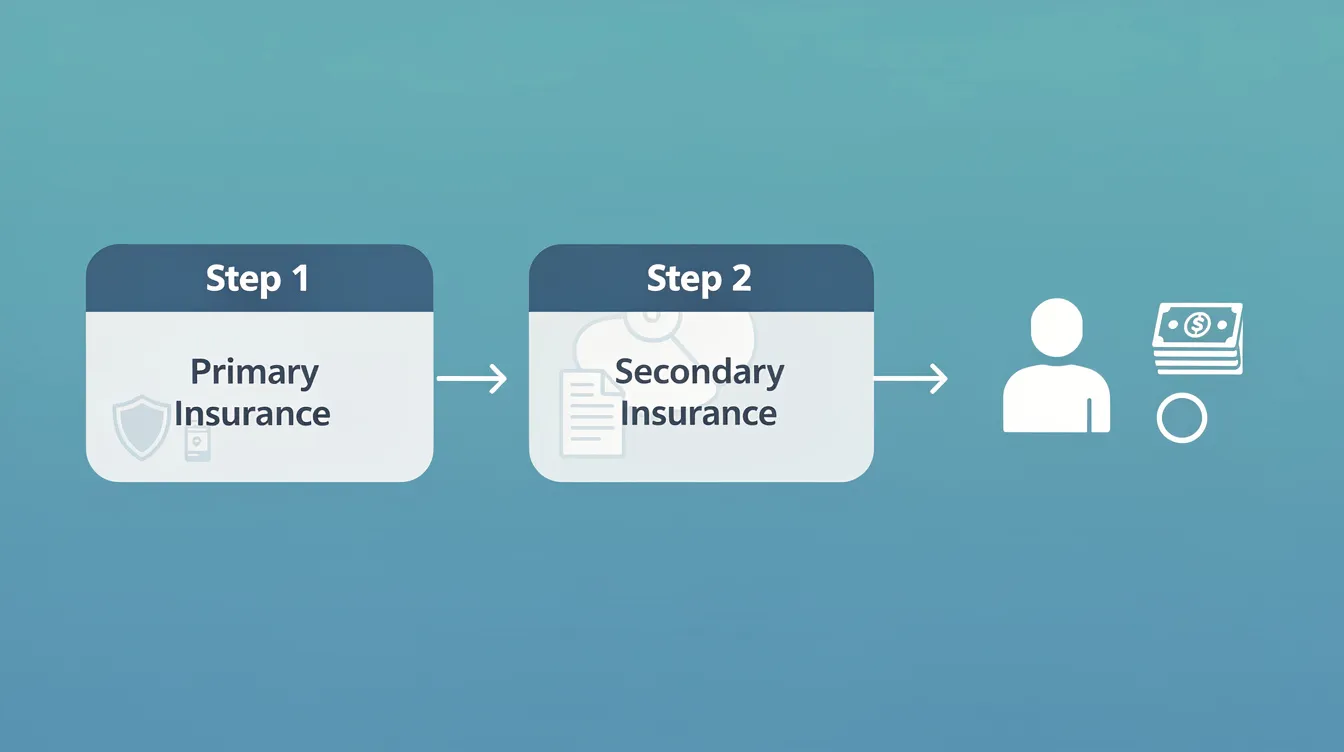
When a patient has more than one insurance plan, coordination of benefits rules determine which insurer pays first (primary) and which pays second. Proper COB handling reduces patient financial responsibility and prevents claims from being denied due to reversed payer order.
How to determine the primary payer:
-
The birthday rule applies to dependent children: the parent whose birthday falls earlier in the calendar year is typically the primary insurer
-
For patients with both employer coverage and Medicare, Medicare may be primary or secondary depending on the employer group size, the patient’s age, and disability or ESRD status
-
Workers’ compensation or liability insurance is generally primary when applicable to the services provided
Steps for verifying secondary insurance:
-
Collect the secondary insurance company name, subscriber ID, group number, plan type, and effective dates
-
Confirm the secondary plan is active and covers the type of service scheduled
-
Verify secondary benefit details separately: coinsurance, deductible, and whether the secondary insurer requires the primary’s explanation of benefits before processing payment
Common COB errors to avoid:
-
Submitting a claim to the secondary before the primary has processed it
-
Estimating patient responsibility based only on primary coverage without accounting for secondary benefits
-
Failing to document which plan is primary in the practice management system, leading to repeated billing mistakes
After verifying both plans, document the estimated patient responsibility clearly so the patient is not surprised by a balance after the visit.
Referrals, Pre-Authorizations, and Medical Necessity
Referrals and pre-authorizations are a key part of verification of insurance: a referral is a direction from a primary care physician to a specialist, typically required under HMO plans. Pre-authorization (also called prior authorization) is formal approval from the insurance company before a service is rendered, confirming the service meets the plan’s coverage criteria and medical necessity standards. Missing or expired authorization is a major driver of claim denials. Prior authorization is covered as its own step in the hub guide to the medical billing process.
Services that frequently require pre-authorization:
-
Advanced imaging: MRI, CT, PET scans
-
Elective surgeries (orthopedic, bariatric, cosmetic)
-
Specialty and physician-administered drugs
-
Extended physical or occupational therapy
-
Behavioral health services, genetic testing, and high-cost durable medical equipment
It is useful to maintain a list of procedures requiring pre-authorization, organized by payer, and update it as payer guidelines change. CMS has also begun piloting prior authorization within traditional Medicare itself: under the WISeR (Wasteful and Inappropriate Service Reduction) model, select outpatient services in six states now require prior authorization starting with dates of service on or after January 15, 2026 – a reminder that authorization requirements aren’t limited to commercial and Medicare Advantage plans anymore.
Authorization workflow:
-
Check the payer’s provider manual or portal to determine if the planned service requires authorization
-
Gather supporting documentation: diagnosis codes, clinical notes, prior treatment history
-
Submit the request through the payer portal or utilization management vendor
-
Track the request status and record the authorization number, effective dates, and any service code restrictions
-
Coordinate closely with clinical staff to ensure documentation supports medical necessity per payer regulations
Without a valid authorization on file, costs may shift directly to the patient or the provider absorbs the loss entirely.
Documenting Verification Results in EMR/PMS Systems
Accurate, time-stamped documentation of every verification of insurance interaction is essential for audits, appeals, and internal communication. Recording reference numbers during verification gives billing staff a concrete trail when a payer disputes what was communicated.
What to document:
-
Verification date and time
-
Method used: payer portal, phone call, clearinghouse batch, or real-time eligibility tool
-
Name and ID of the insurance representative (if by phone)
-
Reference or confirmation number provided by the payer
-
Coverage status: active/inactive, effective and termination dates, in-network status
-
Benefit details: copay, coinsurance, remaining deductible, visit limits, authorization numbers
-
Any special notes or exceptions communicated by the payer
Best practices for documentation:
-
Scan front and back of insurance cards and patient photo ID into the system; ensure the upload is date-stamped so records always reflect the most current card
-
Use standardized verification note templates within the PMS or EMR so different insurance verification specialists document in a consistent format, improving accuracy across the team
-
Restrict access to verified information and insurance records through role-based controls to maintain HIPAA compliance
-
Ensure office staff and front office staff can view verification findings without needing to repeat the process
Documenting verification details this way prevents billing discrepancies and gives every team member – from scheduling to billing – access to the same verified information in one system.
Communicating Coverage and Costs to Patients
Verification of insurance only matters if it reaches the patient in clear, understandable terms. Before or at check-in on the date of service, staff should review coverage findings with the patient to set expectations and support transparent billing.
What to review with the patient:
-
Whether their insurance coverage is active for today’s visit
-
Copay amount due at the time of service
-
Estimated coinsurance and whether their annual deductible has been met
-
Any services that are not covered or are limited under their plan
-
How much of their out-of-pocket maximum has been reached
For higher-cost or elective procedures, provide a written cost estimate that accounts for both primary and secondary payments and the patient’s estimated share. Patients who understand what they are responsible for before treatment are far less likely to dispute bills afterward, which directly supports patient satisfaction and reduces collection effort.
Some practices offer basic financial counseling or payment plan options when verification reveals significant out-of-pocket responsibility. A brief, factual conversation at this stage prevents confusion and builds trust between the provider and the patient.
Common Problems in Insurance Verification and How to Avoid Claim Denials
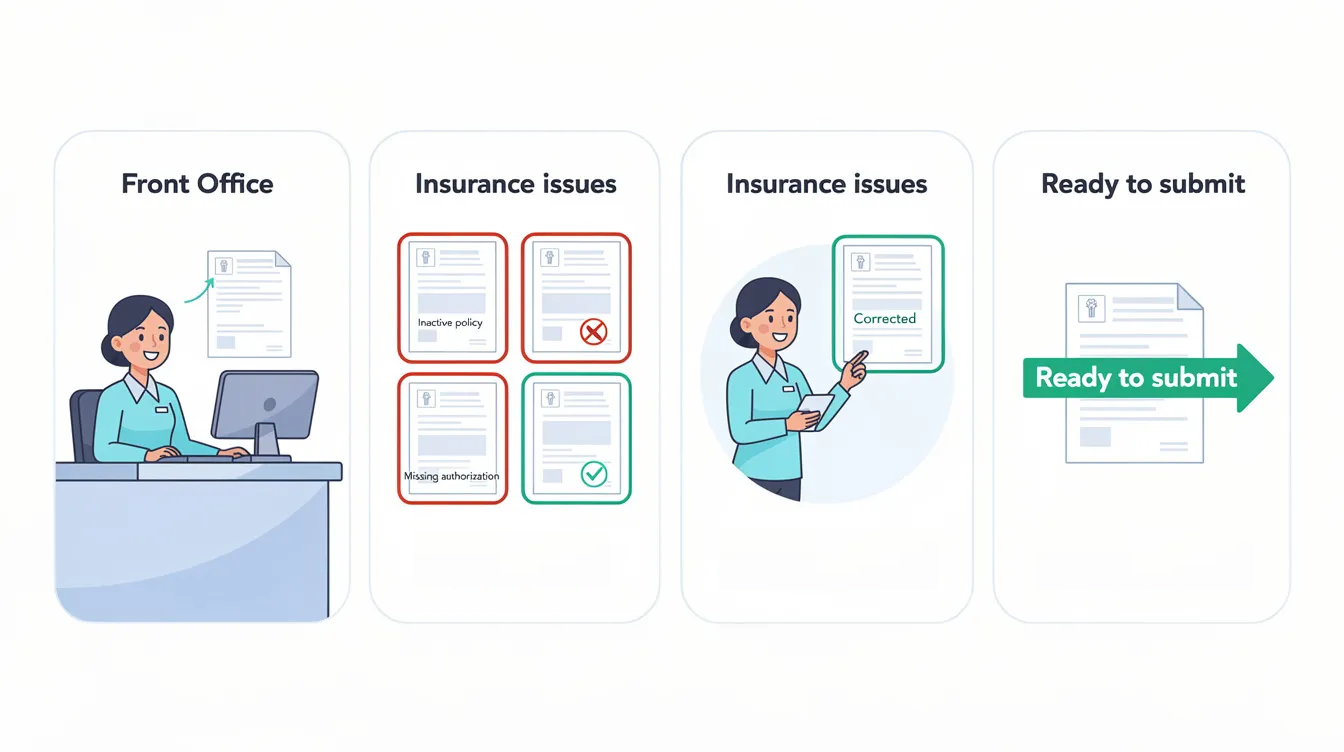
Most front-end claim denials trace back to preventable failures in verification of insurance. Eligibility and registration errors are one of the most common categories of initial denials industry-wide, and according to Change Healthcare’s Revenue Cycle Denials Index report, roughly a quarter of potentially avoidable denials are never recovered once they happen – which is exactly why catching problems at verification, before the claim is ever submitted, matters so much.
Frequent causes of denials:
-
Inactive or terminated policies not caught before service
-
Wrong subscriber ID or incorrect payer selection
-
Mismatch between the patient’s name and what the insurance company has on file
-
Missing referrals or expired pre-authorization
-
Outdated insurance details from patients who changed jobs, switched plans, or enrolled in Medicare Advantage
Safeguards to implement:
-
Reverify patient insurance on a regular schedule (monthly for recurring patients, at minimum) to catch coverage changes before they cause a denial
-
Use mandatory verification fields in the practice management system with validation checks (e.g., correct subscriber ID length)
-
Implement dual review for complex or high-cost services before the claim is submitted
-
Train staff on the most common denial reason codes and hold regular sessions to address recurring errors
-
Track denial trends by reason code to identify where the verification of insurance process needs workflow fixes
Accurate verification of insurance prevents delayed payments and claim denials. Digital solutions like real-time eligibility tools and batch verification can catch problems that manual verification alone would miss, and they meaningfully cut down on the manual phone-call verification that eats up front-office time.
Front-end verification of insurance quality directly affects days in accounts receivable, write-offs, and the overall health of the revenue cycle – a connection covered in more depth in MedicalBillingCourse.com’s guide to revenue cycle management. Every denial that could have been prevented at the verification stage represents wasted time and lost revenue. A full breakdown of denial codes and how to resolve them is available in MedicalBillingCourse.com’s guide to denial codes in medical billing.
Careers as an Insurance Verification Specialist
A career built on verification of insurance, the insurance verification specialist position is a practical entry point into healthcare revenue cycle work. Insurance verification specialists ensure accurate patient insurance information, verify insurance coverage for medical services provided, and help prevent billing issues and claim denials across the organizations they support.
Where they work:
-
Insurance verification specialists work in hospitals and clinics, physician practices, central billing offices, and telehealth companies
-
Many employers now offer remote or hybrid verification positions, making this an attractive role for people seeking flexible schedules
Core duties:
-
Collect and verify patient information, insurance eligibility, and benefits
-
Coordinate referrals and pre-authorization requests
-
Update records in EMR and PMS systems
-
Communicate coverage findings and cost estimates to patients and providers
Qualifications and skills:
-
A high school diploma or GED is the baseline; many employers prefer candidates with medical billing training or certification
-
Attention to detail, familiarity with billing terminology (CPT, ICD-10, HCPCS), and comfort with EMR/PMS software
-
Strong phone and customer service skills for communicating with insurance representatives and patients
-
Comfort managing multiple tasks under scheduling deadlines
How MedicalBillingCourse.com Prepares You for Real-World Insurance Verification
MedicalBillingCourse.com offers self-paced online certification programs built around applied learning in medical billing, coding, and verification of insurance workflows. The 2026 Edition curriculum reflects current payer rules and revenue cycle practices, giving students hands-on exposure to the verification tasks described throughout this article.
What the programs cover:
-
Practice with insurance verification scenarios, including eligibility checks, benefit confirmation, and COB handling
-
CMS-1500 claim training with realistic payer policy exercises
-
Denial prevention strategies, referral and pre-authorization management, and EOB/ERA interpretation
-
Verification checklists and documentation standards that mirror real clinic workflows
Certification tracks available:
-
Medical Billing Certification – focused on billing fundamentals and insurance processes
-
Medical Billing & Coding Certification – expands into ICD-10 and CPT coding alongside billing
-
Home-based business tracks – for those who want to offer verification and billing services to multiple providers as an independent business
These programs provide structured, practical training in verification of insurance and revenue cycle management. MedicalBillingCourse.com’s certification programs cover the full verification workflow described in this article.

Tri Smith is a Managing Partner and Instructor at MedicalBillingCourse.com, where he helps guide the program’s direction, curriculum, and student experience. With more than six years of experience, he focuses on practical medical billing skills, including claims, payer communication, compliance, and the full billing lifecycle.
Tri also helped lead the development of the 2026 course edition, including the Medical Billing and Coding certification track. His approach emphasizes clear instruction, practical application, and preparing students to apply what they learn in real-world billing environments.


