- 08/03/2026
- Posted by: Tri Smith, Instructor
- Categories: Career & Jobs, Training & Courses
Introduction to Medical Billing and Coder Jobs
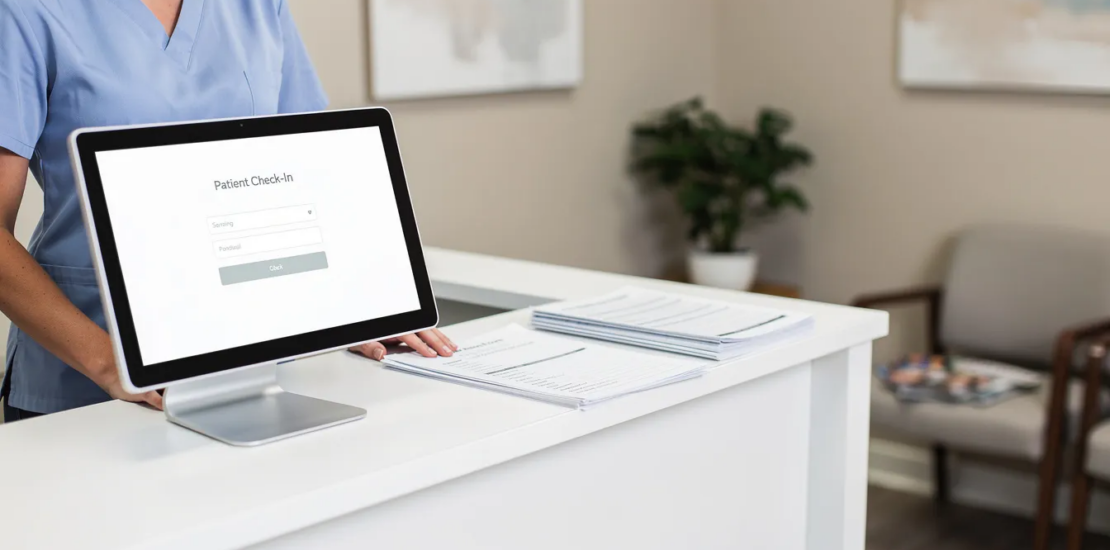
Medical billing and coding are distinct functions in healthcare, but together they form the backbone of how healthcare providers get paid for services rendered. Medical coders assign codes for diagnoses and procedures using standardized systems, while medical billers handle claims and payment processing on the financial side. Some organizations employ separate medical billers and coders; in many small practices, one person manages both roles as a full-time billing and coding specialist.
In 2026, growing patient volumes, complex insurance plans, and stricter medical billing regulations make these roles more important than ever. Accurate coding and billing processes directly affect whether clinics can keep doors open and patients can access timely patient care. MedicalBillingCourse.com is an online training provider focused on practical, self-paced training in medical billing, coding, and home-based business setups.”
Key takeaways:
- Medical billing and coding professionals translate clinical documentation into revenue
- Coders work with diagnosis and procedure codes; billers submit and track insurance claims
- These roles exist across nearly every healthcare setting in the United States
What Is Medical Billing and Coding? (And How Jobs Actually Work Day to Day)
The revenue cycle begins when a patient schedules an appointment. Staff verifies insurance information and insurance coverage before the visit. After the clinical encounter, the provider documents what happened-progress notes, lab results, orders-creating the clinical documentation that coders work from.
A medical coder reviews that documentation, assigns correct codes using ICD-10-CM for diagnoses and CPT/HCPCS for procedures, and checks edits like the National Correct Coding Initiative and Medicare guidelines. Knowledge of coding systems like ICD-10, CPT, and HCPCS is essential in medical billing and coding. Medical coders use these universal code sets to ensure accurate coding and prevent claim denials.
Medical billers then translate patient information into codes combined with insurance data, build the claim on a CMS-1500 or UB-04 form, and submit it through a clearinghouse. Medical billing specialists submit claims to insurance companies and handle denial management, payment posting from ERAs/EOBs, and patient billing for remaining balances.
Mini-example: A patient visits urgent care in 2026 with a sprained ankle. The provider documents diagnosis S93.401A (sprain of unspecified ligament of right ankle, initial encounter). The coder assigns that diagnosis code plus CPT 73560 for the ankle X-ray. The biller verifies the patient’s plan, submits the claim with those codes, monitors for the EOB, and resolves any claim denials-say, a missing modifier. This is how billing and coding work together to ensure services provided are properly reimbursed.
Medical Billing vs. Medical Coding: Job Types and Work Settings
Understanding the key differences between billing and coding helps clarify what each role involves day-to-day. Coders focus on charts, guidelines, and CPT coding accuracy. Billers focus on payers, patients, cash flow, and resolving billing issues.
Coding duties: Review clinical documentation, assign ICD-10/CPT/HCPCS codes, query providers, apply payer-specific edits
Billing duties: Verify insurance, submit insurance claims, post payments, handle unpaid claims, manage medical collections, process patient statements
Common job types and titles in 2026 include:
- Medical coder/coding specialist
- Medical billing specialist/patient account representative
- Revenue cycle specialist
- Medical billing and coding specialist
- Home-based medical biller (often as an LLC remote contractor)
Medical billing and coding professionals can work in various settings including hospitals and physician offices, ambulatory surgery centers, behavioral health clinics, labs, and payer organizations. Job opportunities include roles in hospitals and insurance companies. Medical billers may work in various healthcare settings depending on their specialization.
The growth of remote work opportunities continues in 2026. Over 1,000 work-from-home medical billing and coding jobs are available at any given time, and many employers now hire for a remote position across multiple states. A job summary for these roles typically lists secure internet, cloud-based EMR access, and the ability to work independently.
What Does a Medical Biller or Coder Do? Core Responsibilities
The core job responsibilities differ by role but share the same goal: accurate, compliant revenue capture. Understanding these job responsibilities before entering the field helps candidates choose the right training path.
Medical coder tasks:
- Review patient records and clinical documentation from providers
- Assign ICD-10-CM diagnosis codes and CPT/HCPCS procedure codes
- Apply NCCI edits and payer-specific coding practices
- Query and educate providers when documentation lacks specificity
- Stay current with annual code updates and applicable federal rules
Medical biller tasks:
- Verify patient data and insurance eligibility
- Build and submit CMS-1500/UB-04 claims
- Post ERA/EOB payments and reconcile accounts
- Resolve claim denials and resubmit corrected claims
- Manage patient balances, payment plans, and medical collections
- Ensure compliance with HIPAA and regulatory requirements
HIPAA compliance ensures patient data is secure and properly documented. Medical billing and coding roles require strong attention to detail and knowledge of medical terminology to maintain accuracy.
Billers and coders work closely with clinical staff to resolve claim issues and prevent revenue leakage. In a small family practice, one person may handle everything from coding to collections. In a large hospital, a revenue cycle team splits these tasks among specialists handling outpatient surgeries, inpatient stays, or specific payer lines. Productivity expectations vary-outpatient coders may process 30–60 charts per day, while billers may be responsible for clean claim rates above 95%.
Skills and Knowledge Needed for Medical Billing and Coding Jobs
Strong skills in medical terminology, anatomy, and coding systems are essential for success in this field. Knowledge of medical terminology is crucial for coding accuracy, and a strong understanding of insurance types-Medicare, Medicaid, commercial, workers’ comp-is equally important.
Technical skills:
- Medical terminology and anatomy basics
- ICD-10-CM, CPT, and HCPCS code sets
- Revenue cycle management and denial management workflows
- HIPAA privacy and security rules
- Data analysis for accounts receivable trending
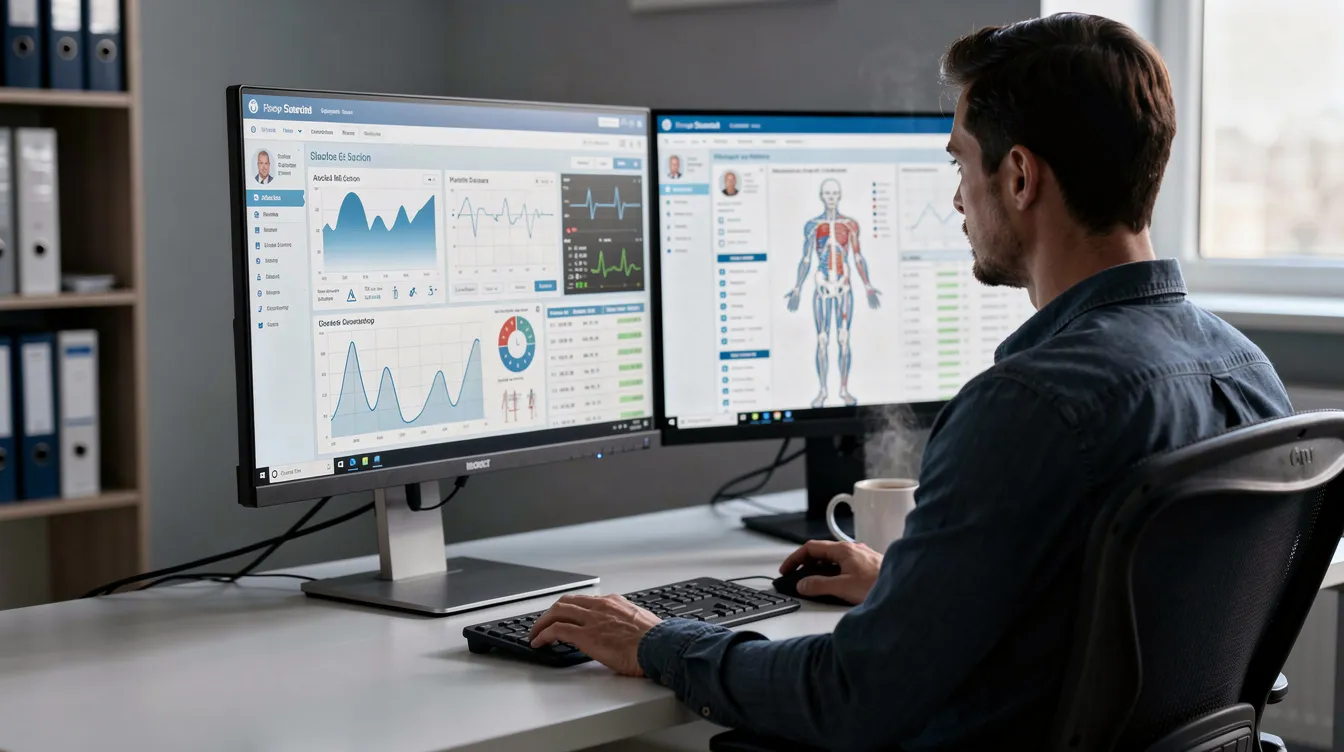
Technology skills are essential for managing electronic medical records. Medical billing and coding training often includes technology skills development covering EMR/EHR navigation, practice management platforms, clearinghouses, and access management for online payer portals.
Soft skills:
- Detail-oriented work habits under production deadlines
- Written and verbal communication for querying providers and speaking with patients
- Problem-solving to resolve claim denials efficiently
- Time management in a high-performance production environment
Soft skills are important for medical billing and coding roles because the work involves constant interaction with payers, providers, and systems. MedicalBillingCourse.com’s 2026 Edition curriculum emphasizes applied learning with real claim examples, building both coding expertise and advanced knowledge of insurance workflows.
Medical Billing and Coding Career Outlook in the United States (2024–2034)
According to the Bureau of Labor Statistics, employment of medical records and health information specialists, a category that includes billing and coding roles, is projected to grow 7% from 2024 to 2034, faster than average for all occupations, with about 14,200 annual openings. Increased medical care demand drives the need for more billers and coders across the country.
Key numbers from labor statistics:
Metric | Value |
|---|---|
Median annual wage (2024) | ~$50,250 |
Remote medical coder average | ~$44,700/year |
Billing & coding specialist average | ~$59,238/year |
Projected annual openings | ~14,200 |
Many coding jobs and billing roles now come with health insurance benefits, and some employers offer tuition reimbursement for professional development and continuing education. Remote and hybrid work arrangements continue expanding, making this a strong career outlook for those seeking flexibility.
Entry-Level Medical Billing and Coding Job Paths
A high school diploma or GED is typically the minimum requirement for medical billing and coding jobs. Unlike careers in biomedical engineering or homeland security that require specialized degrees, entry-level billing and coding positions prioritize practical skills and billing experience over academic credentials.
Common starting roles include medical billing specialist, junior medical coder, charge entry specialist, payment poster, and claims follow-up representative. Many employers hire new graduates into one slice of the revenue cycle-such as payment posting or authorizations-as a gateway to full coding specialist or billing specialist positions. Some open positions start on-site before transitioning to remote or hybrid after demonstrating accuracy.
With focused training, a motivated learner can move from enrollment to the application process for entry-level roles within 4–12 months. Full-time employment is common, but part-time and flexible schedules exist. Certification may be required or preferred by some employers, and earning certification in medical billing and coding is often preferred by employers reviewing candidates. The ideal candidate brings a combination of a coding certificate, practical workflow knowledge, and familiarity with billing software.
When browsing open positions, you’ll notice most listings include equal opportunity language confirming that employers do not discriminate based on national origin, sexual orientation, or gender identity, and provide reasonable accommodation when needed.
How to Train for Medical Billing and Coding Jobs
Training options in 2026 range from community college programs to self-paced online platforms. Medical billing and coding certificate programs can be completed in one year or less. An associate degree in medical billing and coding takes 18 months to two years. Certification in medical coding may be required by some employers, and certifications include Certified Professional Coder (CPC) and Certified Billing and Coding Specialist (CBCS). A CPC certification is widely recognized, but many entry-level hiring managers primarily look for hands-on skills and accuracy.
MedicalBillingCourse.com offers four certification tracks designed for different goals:
- Medical Billing Certification – billing fundamentals and insurance processes
- Medical Billing + Home-Based Business – adds training on starting an independent billing business
- Medical Billing & Coding Certification – expands into ICD-10 and CPT coding alongside billing
- Medical Billing & Coding + Home-Based Business – full-stack training combining billing, coding, and business setup
The 2026 Edition includes structured chapters, quizzes, CMS-1500 claim practice, denial resolution exercises, and downloadable references. Self-paced online education works well for adults changing careers or balancing family responsibilities-lower cost, no commute, and direct preparation for real billing workflows.

Is a Medical Billing and Coding Career the Right Fit for You?
This field suits people who prefer working behind the scenes rather than in direct patient care, enjoy detailed problem-solving, and can handle repetitive tasks under deadlines. Consider whether you’re comfortable with:
- Working independently at a computer for most of the day
- Keeping up with yearly code and policy changes
- Communicating professionally by email or phone with payers and clinical staff
- Handling sensitive patient information with discretion
- Being persistent when working to resolve claim denials on stubborn unpaid claims
If you’re detail-oriented, responsible with deadlines, and interested in healthcare without needing a clinical license, medical billing and coding offers realistic career paths with remote flexibility and room for professional development into senior roles like auditor, compliance officer, or billing manager.
Next Steps: Getting Started with MedicalBillingCourse.com
The path from choosing this career to landing a first medical billing or coding position is shorter than many people expect. With the right training, you can build the skills that employers actually look for-familiarity with billing processes, coding accuracy, and confidence navigating real insurance workflows.
To get started, visit MedicalBillingCourse.com to browse the four certification tracks, review the updated 2026 curriculum, and enroll directly online. Set a concrete timeline: commit to finishing your chosen program within a target number of months, then begin applying for open positions.
Your next steps:
- Choose the certification track that matches your career goals
- Begin self-paced training with real-world billing and coding scenarios
- Complete your program and start applying for full-time or part-time roles
- Consider the home-based business track if you want to work as an independent billing specialist
The career outlook is strong, remote opportunities are growing, and healthcare providers need skilled professionals now. Start building your future in medical billing and coding today.

Tri Smith is a Managing Partner and Instructor at MedicalBillingCourse.com, where he helps guide the program’s direction, curriculum, and student experience. With more than six years of experience, he focuses on practical medical billing skills, including claims, payer communication, compliance, and the full billing lifecycle.
Tri also helped lead the development of the 2026 course edition, including the Medical Billing and Coding certification track. His approach emphasizes clear instruction, practical application, and preparing students to apply what they learn in real-world billing environments.


