- 01/19/2026
- Posted by: Tri Smith, Instructor
- Category: Medical Billing Course

Your Complete Guide to Medical Billing Course Costs: Tuition, Certifications, and Smart Budgeting
Ready to explore a medical billing career? This guide breaks down medical billing course costs, covering tuition, materials, certification fees, payment plans, and hidden expenses. We’ll help you compare options, plan a realistic budget, and understand your investment. Discover what makes up tuition, which certification costs are bundled, how interest-free payment plans ease expenses, and your timeline to become career-ready. We focus on practical comparisons, potential return on investment, and clear transparency. Inside, you’ll find checklists for hidden fees, sample payment schedules, and a straightforward comparison showing how inclusions boost long-term value. Dive into sections covering core tuition, certification fees, payment options, price-to-value comparison, ROI, and career launch speed.
“Understanding the true cost of a medical billing course goes beyond the sticker price. It’s about the comprehensive value, what certifications are included, the quality of instruction, and the career support you receive. Transparency is key to making an informed investment in your future.” – Tri Smith, Instructor at MedicalBillingCourse.com
What’s Included in Your Medical Billing Course Tuition?
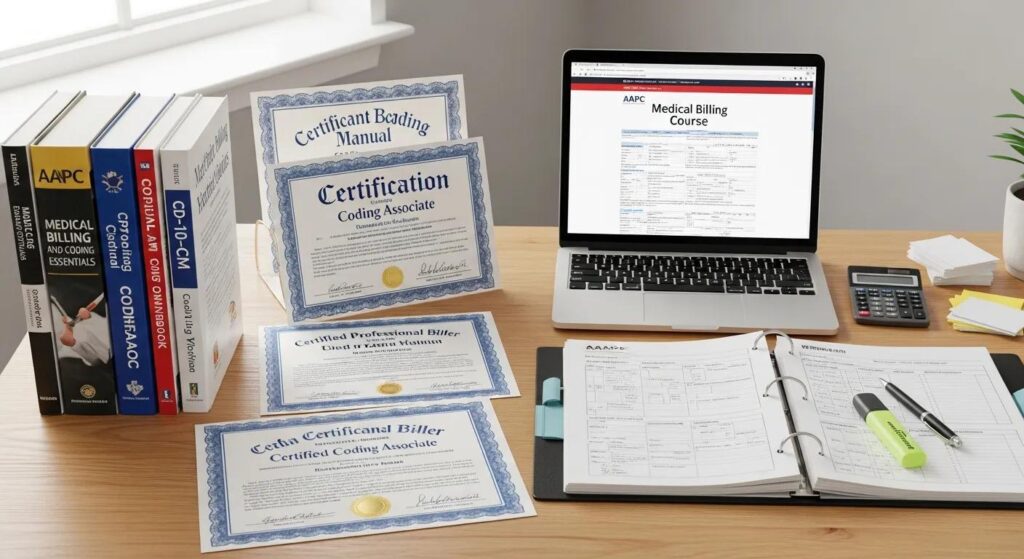
Core tuition typically covers instruction, all learning materials, assessments, and basic certification processing. These items form the bulk of your investment in an online medical billing program, granting access to a well-organised curriculum, essential assessments, and instructor or support access. Programs that include exam fees and job-support tools generally offer higher measurable value than those with add-ons. Our table below presents specific program offerings and their tuition coverage, allowing you to quickly scan inclusions.
| Program | Price | Key inclusions (certifications, hours, support) |
|---|---|---|
| P1 (CMBP and HIPAA) | $699.95 | CMBP certification, HIPAA certification, ~50 hours curriculum, assigned instructor, 24/7 student support |
| P2 (CMBP, HIPAA + Work From Home Business Modules) | $899.95 | CMBP + HIPAA, extra work-from-home business modules, ~65 hours curriculum, assigned instructor, job placement database access |
| HIPAA Compliance Course (standalone) | $149.95 | HIPAA certification only, condensed course materials, certificate issuance |
How Does MedicalBillingCourse.com Structure Its P1 and P2 Program Pricing?
At MedicalBillingCourse.com, we offer two main packaged tuition options and a standalone HIPAA course, all with clear price points tied to defined inclusions. Our P1 program bundles both the Certified Medical Billing Professional (CMBP) and HIPAA certification. The P2 program adds specialised work-from-home business modules. Our HIPAA standalone option is also available. These clear menus demonstrate our commitment to transparent pricing, where essential certifications and career resources are built into your tuition.
What Study Materials and Resources Are Included in Your Medical Billing Course Cost?
A transparent medical billing course explicitly lists all study materials and learner services included in your tuition. Typically, an all-in-one package includes chapters/modules, downloadable study guides, video lessons, examinations leading to certification, direct instructor access, and career resources. Technology requirements are minimal. However, optional extras like proctored exam services, printed textbooks, or third-party software might incur additional costs. Always confirm what’s included and what’s optional.
What Do Medical Billing Certification Fees Cover, and What’s the Cost?

Certification fees typically cover exam administration, grading, and credential issuance. Knowing what the fee covers helps you compare if a program genuinely prepares you for employer-recognised credentials. When bundled into tuition, you gain immediate value as your course includes both training and the essential credentialing pathway. Conversely, some programs require separate payments for exams or certificates. Below is a concise list explaining the main components covered by typical certification fees.
- Exam Administration: Covers costs for proctoring, secure delivery, and thorough grading.
- Scoring and Reporting: Pays for processing scores and issuing official certificates or digital credentials.
- Credentialing Maintenance: Supports systems for ongoing verification and record-keeping, accessible by employers.
What’s the Cost for Certified Medical Billing Professional Certification?
When a program includes the Certified Medical Billing Professional (CMBP) credential as part of your tuition, the direct exam cost is covered. The CMBP credential signals competency in core billing tasks, claim submission, compliance, and reimbursement processes. Including CMBP in your course tuition significantly reduces your total cost to become hireable. If pursuing alternate third-party credentials, plan for separate exam or application fees.
Are HIPAA Certification Fees Included in Your Medical Billing Course Cost?
HIPAA compliance certification is commonly bundled with broader billing programs or sold standalone. In our offerings, HIPAA certification is included in both P1 and P2 tuition packages. A dedicated HIPAA Compliance Course is also available for $149.95. HIPAA certification proves understanding of patient-privacy regulations and secure handling of protected health information, which employers require.
What Payment Plans and Financial Aid Options Are Available for Your Medical Billing Training?
Flexible payment plans and clear financing options make medical billing course costs attainable. Interest-free plans split tuition into multiple payments with no interest, provided payments are on schedule. These plans often have 1–5 payment terms and explicit conditions for missed payments, late fees, and cancellations. A clear schedule should show the number of payments, exact due dates, and precise instalment amounts for complete transparency. The table below offers sample payment plan entries.
| Payment Option | Terms | Example monthly payment/notes |
|---|---|---|
| Single payment (discount) | Full tuition is due upfront | P1: $699.95 once; potentially lower total cost if a lump-sum discount is offered |
| 2-installment interest-free | 2 equal payments, no interest | P1: 2 × $349.98; no interest when paid on schedule |
| 5-installment interest-free | 5 equal payments, automated billing | P2: 5 × $179.99; spreads cost over months with no interest |
Before enrolling, always request full payment terms and carefully read policies on missed payments or refunds. “Interest-free” often depends on strict adherence to the payment schedule and may include administrative penalties for late payment.
How Do Interest-Free Payment Plans Work at MedicalBillingCourse.com?
Our interest-free plans at MedicalBillingCourse.com allow students to divide tuition into multiple scheduled payments without added finance charges, as long as payments are on time. For instance, a P1 tuition can be split into two equal charges, or a P2 program into five automated charges. Plans typically require automatic billing and may include conditions for missed payments or administrative fees, so verifying our refund and cancellation policies is crucial. If using employer tuition assistance or grants, coordinate payments with our schedule to avoid issues.
Are Scholarships or Other Financial Aid Options Available for Medical Billing Course Costs?
While direct institutional scholarships may be limited for short professional certificate programs, students can often combine employer tuition assistance, workforce development grants, or small private education awards to offset medical billing course costs. Many providers, including us, offer interest-free payment options and periodic promotions rather than traditional scholarships. Local workforce boards, community foundations, or employer tuition programs are excellent external avenues. Contact our student support team for internal assistance or recommended external resources.
How Does MedicalBillingCourse.com Stack Up Against Other Medical Billing Course Costs?
Comparing price to true value means examining inclusions (certifications, hours, instructor access) and what other providers charge separately. Many seemingly inexpensive programs surprise you with additional exam or placement fees later. Industry medical billing course cost ranges vary widely, from a few hundred to several thousand dollars, depending on accreditation, practicum, or length. Higher-cost programs often include externships or college credit. MedicalBillingCourse.com strategically positions its packaged options below many multi-thousand-dollar alternatives, bundling essential CMBP and HIPAA certifications, dedicated instructor support, and job placement database access. The table below summarises provider types, typical cost ranges, and common hidden fees to watch for.
| Provider Type | Typical Cost Range | Inclusions / Hidden fees to watch for |
|---|---|---|
| Short private certificate providers | $500–$2,000 | May include certifications; always check for exam/proctor fees and placement services |
| Community college / accredited programs | $1,000–$5,000+ | Often include credit and externships; watch for registration and technology fees |
| Self-paced online vendors (package-based) | $300–$1,500 | Value depends heavily on whether exam, instructor access, and job resources are included |
What Are the Typical Industry Medical Billing Course Costs for Certification Programs?
Typical costs largely depend on program scope. Short, self-paced certificates focusing on billing basics are commonly priced in the low hundreds to low thousands. College-level programs with academic credits, longer curricula, or practicum hours often exceed this range. Major cost drivers include institutional accreditation, academic credit transferability, required practicum/externship placements, and additional certifications or comprehensive job-placement services. For rapid workforce entry, shorter bundled programs with recognised credentials and instructor support offer faster time-to-career at a lower total cost. Comparing estimated hours to complete helps align price with your timeline and goals.
What Hidden Fees Should You Watch Out For in Other Programs?
Hidden fees commonly inflate training costs and often surface *after* enrollment. A smart checklist is essential for interrogating program transparency. Always ask providers about software licenses, proctoring/remote exam fees, exam retake charges, registration/administrative fees, and whether printed materials or live practicum placements carry additional costs. Verifying refund policies, credit transferability, and the exact scope of “support” or “placement” services prevents surprises. Use the checklist below to guide your pre-enrollment questions.
- Software or platform licenses: Will you need to purchase specific billing software or pay recurring access fees?
- Proctoring/exam fees: Is remote proctoring or a third-party exam vendor charged separately?
- Retake or grading fees: Are exam retakes free, or do they incur additional charges?
- Administrative or registration fees: Are there one-time administrative costs beyond the advertised tuition?
What’s the Return on Investment for Medical Billing Certification?
Your return on investment (ROI) for medical billing training combines training cost, time-to-certification, and job outcomes like salary uplift, employment rates, and potential to start your own billing business. Short, focused programs with employer-recognised credentials and job-placement resources significantly compress the payback period by enabling quick workforce entry. Employers prefer certified candidates, which can lead to higher starting offers or faster placement. When calculating ROI, factor in local demand, the value of bundled career resources like placement databases, and entrepreneurial modules.
- Time to income: Shorter programs (50–65 hours) drastically reduce the period before earning from new skills.
- Credential value: Including certifications like CMBP and HIPAA significantly boosts employer confidence and hiring likelihood.
- Career support: Access to job placement resources speeds up application pipelines and interview readiness.
How Does Certification Boost Your Job Prospects and Salary?
Certification powerfully signals standardised competence and often moves applicants ahead of non-certified peers during screening, especially for roles handling claims processing, coding interfaces, and compliance checks. Employers commonly list certification or demonstrated proficiency as a strong hiring preference. Having CMBP and HIPAA credentials streamlines hiring and reduces employer concerns about on-the-job training. While salaries vary, certification typically improves hiring prospects and can accelerate progression to higher-pay roles. Combining credentialed training with active use of a job placement database and targeted resume materials significantly increases the likelihood of quicker placement and faster tuition recoupment.
Why Is Medical Billing Considered a Recession-Proof Career Choice?
Demand for medical billing is consistently sustained by continuous patient care needs, ongoing insurance processing, and electronic workflows requiring trained administrative staff, regardless of economic cycles. An ageing population and consistent healthcare utilisation make claims processing an ongoing necessity, supporting demand for billers. The role’s adaptability to remote work and availability of work-from-home business modules make it attractive for employment stability and entrepreneurial income. For career resilience, short credential programs focusing on up-to-date billing practices and HIPAA compliance provide a pragmatic, secure route into a steady occupational field.
How Long Does It Take to Complete Medical Billing Courses and Get Certified?
Time-to-completion is critical for ROI and planning. Many streamlined online billing packages are designed for completion in weeks to months, depending on your study pace, making them efficient pathways into a new career. Self-paced formats allow acceleration or balancing with other commitments. Two common timeframes for bundled offerings are roughly 50 hours for a focused billing package and about 65 hours for programs with additional business modules. Translate these hour estimates into weekly study plans for realistic completion targets and effective job-search coordination.
What’s the Time Commitment for P1 and P2 Programs?
Our P1 option maps to approximately 50 hours of curriculum. Dedicating 8–10 hours per week allows completion in roughly 5–7 weeks. For part-time learners allocating 5 hours per week, expect a closer to a 10-week completion. The P2 program requires about 65 hours due to extra business modules. At 8–10 hours per week, that equates to 7–9 weeks of study. Assigned instructor support and 24/7 student assistance help keep you on schedule.
How Quickly Can You Become Career Ready After Certification?
Becoming career-ready after certification depends on having completable credentials, strong resume/interview preparation, and active job-search strategies. With our included placement resources, many students transition to entry-level roles within a few weeks to a few months after coursework. Utilising a job placement database, preparing compelling materials, and practising mock interviews significantly accelerate hiring. For entrepreneurial students completing P2 work-from-home modules, initial client outreach can begin soon after certification. Pairing a compact time-to-certify (50–65 hours) with proactive job-search and placement tools dramatically shortens your runway from enrollment to income.
Frequently Asked Questions
What prerequisites do I need to enrol in a medical billing course?
Most medical billing courses don’t require specific prerequisites, making them widely accessible. However, a basic understanding of medical terminology and general healthcare processes can be beneficial. Some programs might suggest familiarity with computers and online learning platforms. If new to the field, consider reviewing introductory materials.
How do I choose the perfect medical billing course for my career goals?
Choosing the right course involves assessing your career objectives, budget, and preferred learning style. Identify if you need a comprehensive program with key certifications (like CMBP and HIPAA) or a more focused course. Compare curriculum, instructor support, and job placement resources. Consider course duration and flexibility. Reading reviews from former students can also provide valuable insights.
What job opportunities open up after completing a medical billing course?
After completing a medical billing course, graduates can pursue various job opportunities. Common roles include medical billing specialist, claims processor, and billing coordinator in hospitals, clinics, insurance companies, and private practices. Those completing entrepreneurial modules may launch their own medical billing businesses. Demand for certified professionals remains strong, providing a solid foundation for career advancement.
Can I really work from home as a medical biller?
Absolutely! Many medical billing positions now offer the flexibility to work from home due to the rise of telecommuting in healthcare. Completing a course with specialised work-from-home business modules can further prepare you. Ensure you have a reliable internet connection and a dedicated workspace. Networking and utilising job placement resources can help you discover remote opportunities.
What’s the average salary for medical billing professionals?
The average salary for medical billing professionals varies by experience, location, and specific role. Entry-level positions typically start around $35,000 to $45,000 annually, while experienced billers can earn $50,000 to $70,000+, especially in specialised or management roles. Additional certifications, specialised skills, and healthcare facility type also influence salary. Researching local salary trends provides a clearer picture of potential earnings.
How often do I need to renew my medical billing certification?
Certification renewal requirements vary by certifying body. Generally, medical billing certifications like CMBP typically require renewal every two to three years. This often involves completing continuing education credits to stay updated on industry changes. Some organisations may also require a renewal fee. Staying current enhances knowledge, improves employability, and demonstrates commitment to professional development.
About the Author
Tri Smith is a dedicated Instructor at MedicalBillingCourse.com, bringing over five years of invaluable experience in guiding students to successfully earn their medical billing certification. Committed to fostering an inclusive learning environment, Tri supports learners from all backgrounds, ensuring they gain the essential skills and confidence needed for a thriving career. His passion lies in empowering graduates to transform their training into tangible career opportunities, including securing remote billing roles and launching their own successful home-based medical billing businesses.

Tri Smith is a Managing Partner and Instructor at MedicalBillingCourse.com, where he leads both the strategic direction and instructional delivery of the program. With over six years of experience, he works closely with students and internal teams to ensure the course remains aligned with real-world medical billing practices while continuing to evolve with industry needs.
His work focuses on guiding learners through the full medical billing lifecycle, from foundational processes to more advanced topics such as claim accuracy, payer communication, and compliance. He is directly involved in how the course is structured, how assessments are designed, and how students are supported as they progress from training into practical application.
Under his leadership, MedicalBillingCourse.com launched the 2026 edition of the course, which includes the new Medical Billing and Coding certification track and reflects a more modern, structured approach to training. These updates emphasize clarity, real-world readiness, and scalable learning systems that support both new students and returning graduates.
Tri has helped thousands of students complete their certification and move into roles ranging from remote billing positions to in-office healthcare settings and independent billing businesses. His approach emphasizes practical execution, consistent standards, and the ability to turn training into a real opportunity.